What is the status of Q?

Anyone who's starting to tire of my holiday snaps will be pleased to know that I'm back in the UK, and, while I may yet post the odd picture over the next few days, they should decline to a respectable level before long! On Monday, I need to get back to work.

Various friends have been asking just what 'back to work' entails for me at present, since my situation has been decidedly vague for a while. So here's a quick personal update for those interested...

After leaving Camvine in the autumn, I had a bit of a break, and then started a new company, Telemarq Ltd. (Hans Rosling once told me that he had worked out my model: whenever I run out of money, I start a new company! That's not the intention, but it does sometimes look like that...)

Telemarq was initially formed as a vehicle for the exploration of a new invention. I think I have a good and viable idea, but I don't have the resources to get it very far on my own (and I haven't yet filed the patent, which is why I'm not broadcasting the details!)

Anyway, as I was debating whether to go out looking for investors for another startup, I was approached by several different companies who wanted some consultancy work, and I thought they would all would be rather interesting/enjoyable clients. Besides which, my bank account had dwindled to a level where it needed some topping-up!

So, for the moment, Telemarq is a consultancy business through which Rose and I do our work (which means it already has a rather broad remit, since our fields are very different). I'm delighted that Richard Morrison is going to be working part-time under the Telemarq banner too, since he's one of the nicest and smartest chaps I've run into in a long time.

A big part of Telemarq will be software development, but there's some teaching, some publishing, some intellectual property stuff in the mix already, and we're only just starting.

May need some more people soon, or some more days in the week...!

To the extent I've formulated a coherent plan, it's this:

To do really good work, on interesting projects, for, and with, people we like.

Not exactly a conventional business mission statement, but I've seen a lot worse. It'll do as a placeholder!
Multi-hop networking

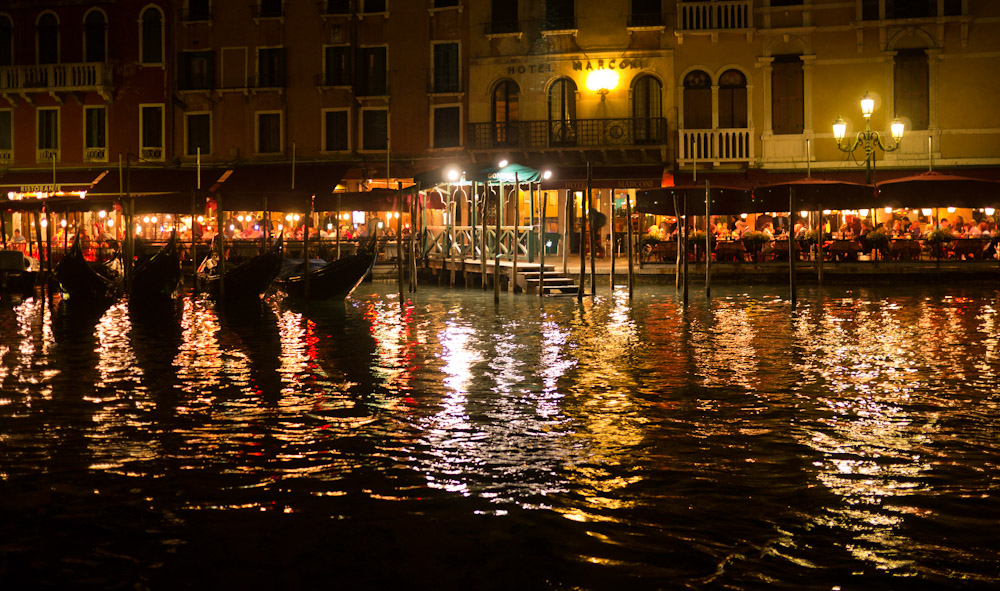
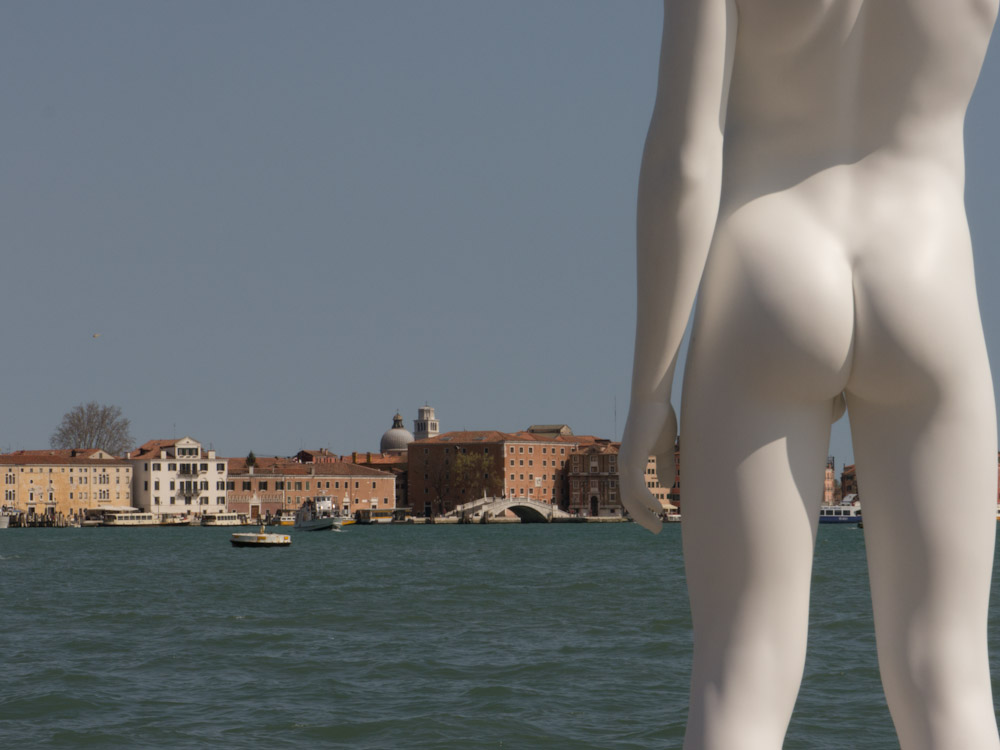
Venice, as you may know, is made up of about 100 islands connected by lots of little bridges. That's roughly how the little network here in my Venice hotel room works, too.

The hotel charges for a wifi connection - only a one-off charge, but it is per-machine, so I only paid for my Macbook to be connected. With recent versions of OS X you can easily create a PAN (a 'Personal Area Network') using Bluetooth, so Rose's laptop and my iPad could then get access by using my Mac as a Bluetooth < -> Wifi gateway. All very cool.

However, I could not get my iPhone to connect that way. I don't know whether it should work or not - the general expectation is that you're more likely to use your phone to provide connectivity for your laptop than the other way around! But I wanted a connection for the phone because I needed to download maps and other reference materials to have in my pocket as we explored, and I didn't want to pay roaming data charges.

And then I realised that, just as my laptop was sharing its wifi connectivity to Rose's laptop using a Bluetooth PAN, so her machine could then share that connectivity as a wifi network again! And, hey presto, my phone had a network, so I can now download maps to my heart's content!

What else would one be doing in Venice, after all?...

:-)

The heartache and thousand natural shocks that startups are heir to

The Camvine office is now, to all extents and purposes, finally closed. A quick summary is that we had a great team who worked very hard, a great product, customers who really liked what we did and placed repeat orders frequently, but we just never found a way to get enough of them through the front door each month to keep the company going. The fact that I started the company just at the beginning of a recession didn't help, either!

An emotional time for us all, and the fact that I've been out of the company for six months or so now doesn't lessen that fact. It hasn't been appropriate for me to write about it before, because of the various deals and legalities going on, and I'm not going to do so yet either, except to say that deals have been struck which mean that the CODA system will live on, in some form, and involving some of the original people, at other companies.

Garry, the backbone of the technical team for several years, has written a blog post about the trials, tribulations, and technical challenges of his life at Camvine.


Legal Foundations

An elderly woman in Manhattan walked into the door of an Apple store. Rather literally: the door was too shiny and clean, and she broke her nose on it. Now, that's no fun for anyone, but she's suing Apple for a million dollars. Must have been quite a nose.

I wonder what the success rate for this sort of case is? I mean, could I make a living out of walking into doors, slipping on floors, etc? I'd be willing to sustain quite a few minor injuries at $1M a time.

The law of costs is a wonderful thing, and it helps most nations avoid a great deal of the silliness that afflicts the American legal system. This case is very reasonable compared to some. I don't think Apple should be fined $1M, but something should probably be done - they should apologise and should be required to buy a roll of stickers to put on their doors. Giving her an iPad would be a nice gesture.

It really bugs me that so many people in the world seem to operate on this basic principle:

IF

  • Something bad happens to me
AND
  • You have lots more money than me
THEN
  • It must be your fault
AND THEREFORE, NATURALLY
  • I should have lots of your money


If exactly the same thing happened at, say, your sister's house, would you ask her for a million dollars? Of course not. It's attempted redistribution of wealth through forceful means, that's what it is. Communists.


Photostream2Folder

Apple users, especially those with iPhones or iPads, will know about the Photo Stream cloud service that makes your recent photos available on all your devices. You can take a photo on your phone, open up your laptop, and find it already available in iPhoto or Aperture.

But what if you don't use iPhoto or Aperture? (I've recently switched to Lightroom and found myself missing this feature). Or you want to do something automatically with every photo you take, like emailing them to Granny?

Well, then you want Laurent Crivello's Photostream2Folder utility, which polls your stream periodically and simply puts the recent photos in a folder on your disk. Very handy.

Is the 'Internet of Things' the BBC Micro of the future?

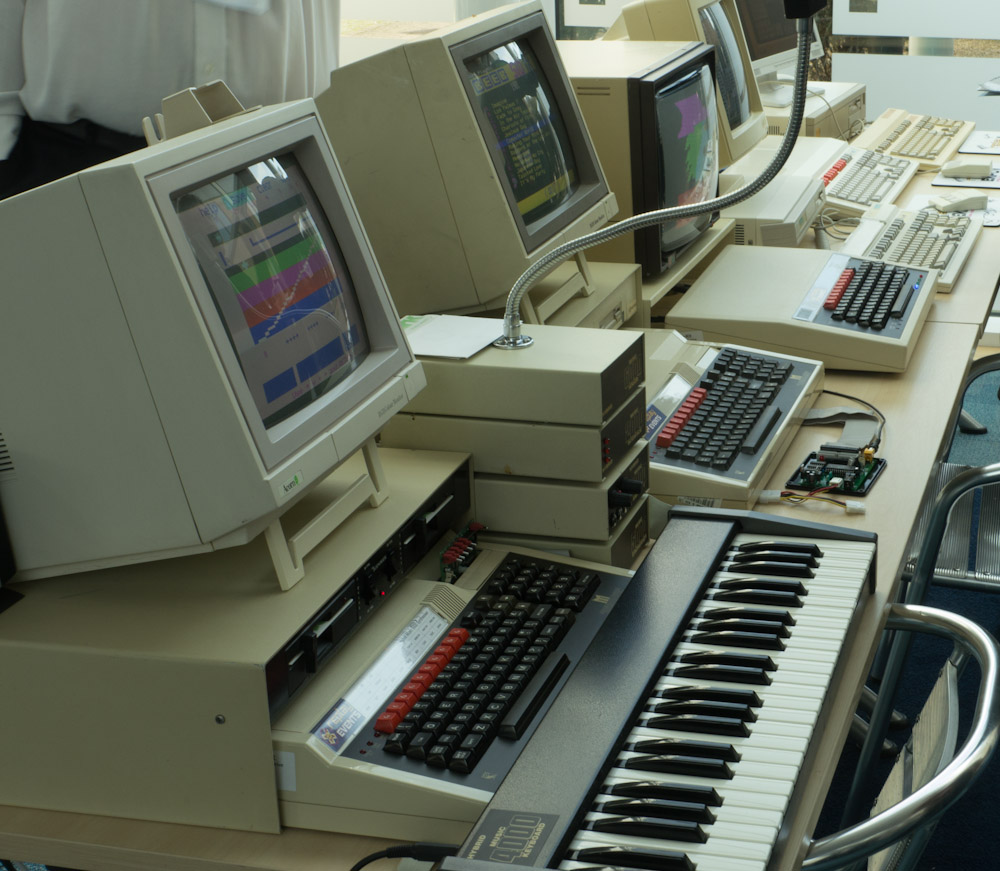
Domesday ProjectThere was a great opportunity in Cambridge today for techies of a certain age to get all nostalgic about a machine which, for many of us, changed our lives, at the 30th anniversary party for the BBC Micro.

Organised by Jason Fitzpatrick's soon-to-be-Cambridge-based Centre for Computing History, with the assistance of ARM, Redgate and several others, this brought together most of the original team, and many of the original machines and peripherals, that we remembered so well.

There was much discussion about the legacy of the project, and my friend Eben Upton gave an inspiring talk about the aims of the Raspberry Pi team, which many hope will be the BBC Micro for the next generation.

One thing that occurred to me during the presentations was that the original BBC Model B sold for £399, or approximately £1200 in today's money. (That's about the price of a MacBook Pro now.) The investment that my parents were making in my future was not the cost of a Raspberry Pi. It was the cost of about 40 Raspberry Pis - a whole classroom-full. Eben, significantly, pointed out in his talk that they hoped it wouldn't really be schools or parents who would buy most of these. It would be the children themselves. And I think that's important.

Beeb peripheralsNow, progress always depends on building new layers of technology on the platforms provided by the past. When I was young, the transition in play was from a world in which we bought electronic components to one in which we bought computers. Sinclair and Acorn made that transition accessible to kids. But computers are now a commodity, and you can argue that what's really important for kids to learn is the different ways of connecting them together in the real world. So my hope is that initiatives like Raspberry Pi will allow kids not just to own a computer, but to own a network. To learn about how networks work, to invent new ways of making use of them. Yesterday's solder track is today's ethernet cable. Yesterday's 6502 assembly language is today's IPv6 routing table.

And if we believe that there's any mileage in the internet-of-things/automated-home ideas, then perhaps the equivalent investment that today's parents might make could be, say, a 'connected room' kit, which allowed kids to give a URL to each lightbulb, each plug socket, each radiator valve, each loudspeaker, and the door. And then see how they link those together, and to their Facebook account, and to the Xbox, and so forth. Turn the music on when you turn on the light. Turn the heat down when you go to bed. Turn the lights down when you turn on the TV. It's a Lego kit that lets you play with the living spaces of the future, and perhaps monitor your carbon footprint at the same time.

Maybe... I don't know. There may be better ideas. This sounds fun to me, though! It could teach you a lot about networking.

And it could still cost much less than the original BBC Micro did.