Category: General

Language Skills for Time Travellers

Greetings, O time-traveller from the past! Welcome to our decade!

You may have noticed some distinct eccentricities in the English spoken in our time, but here is a quick phrase book to help you understand some of our more curious modes of speech:

2020s English Traditional English
"What's happenin'?" = Good morning/afternoon/evening
"upskilling" = training
"to incentivize" = to give an incentive to
"cosplay" = dressing up
"going forward" = in the future
"reaching out to" = contacting
"he gifted" = he gave
"wellness" = feeling happy
"poor mental health" = feeling unhappy
"tweeting" = (actually, you probably don't need to bother about this one any more)

Now, let's put what we've learned into practice. Here's an example message that might be received by an employee of a company in the early 2020s from the senior management. Using the above table, you should be able to understand it:

What's happening, everybody? Great news! We're reaching out as part of our wellness and incentivization program to let you know that, going forward, we'll be gifting you everything you need to participate in the cosplay sessions, which will take place on the evening before each of the monthly upskilling days. Remember, regular social activity has been proven to enhance your mental health!

What? Wait a minute...! You're not staying?

Mostly Armless

Here's a completely unsolicited recommendation for a product I just happen to like quite a bit and have been using for many years.

Having been fortunate enough to have excellent eyesight for the first four and a half decades of my life, I found that, as for so many people, things started to go downhill from there. One of the first things I discovered was that reading in bed was decidedly tricky, especially if, like me, you like lying on your side, and the arms of your reading glasses are mashed into the pillow.

"Aha!", I thought, "There's a solution for this. I need some pince-nez!" And I tried experimenting with antique ones purchased from eBay, or cheap ones found elsewhere online. One of my early YouTube videos, nearly eight years ago, was about using them inside a cheap VR headset! But they were never very satisfactory.

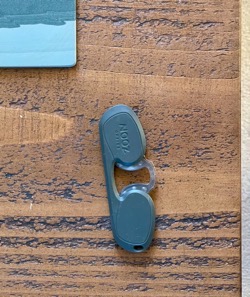
And then I came across a French company named Nooz. They now make a variety of different reading glasses, but it was the Nooz Originals that caught my eye; the pince-nez du jour, available with 5 different strengths from +1 to +3, and with a nice soft silicon bit to grip your nose.

Nooz pince-nez

They come in a pretty indestructible case which fits easily in your pocket or on your key ring, if you don't, like me, just leave them on the bedside table. Because one thing I can guarantee is that you won't look quite as good wearing them in public as the models on the Nooz website. Or at least, I won't!

But optically, for a 20-quid pair of plastic glasses, they work really quite well, and they solved the reading-in-bed problem perfectly for me: I've used them ever since.

Q wearing Nooz

Now, where are my lorgnettes?

Chatting with the Bard?

Many, many years ago, I asked a friend of mine at Microsoft what he was working on, if he was able to tell me. I've always remembered his response. "I'm part of my company's obsessive need to always try and play catch-up with Google."

Well, the FT reported today that Google will soon be launching 'Bard', their competitor to ChatGPT, and no doubt many column inches will be written about their relative merits in the next few months. Microsoft has invested heavily in ChatGPT and is planning to incorporate its output into the Bing search engine. Perhaps, for once, they may have done a bit of leapfrogging?

I doubt they'll hold any advantage for very long: Google have a lot of very smart and very expensive researchers at DeepMind to draw upon, not to mention elsewhere in the company. But there's clearly a race on: if people really do want to get responses to their search queries in paragraph format, or even in essay format, then the novelty value might persuade large numbers who have never even tried Bing to give it a go, and perhaps stick with it. That could make a significant difference. (It may also spell the death knell for smaller search operations like DuckDuckGo who don't have access to the same scale of resources.)

If such technologies do indeed become a key part of search results, then two questions immediately come to mind for me.

The first is the general question of attribution. Google search is currently a way of finding out not so much what Google says, but what other people say... as prioritised by Google. But you get back a series of citations of other websites, so you know where the answers come from. Even when people ask Google questions of opinion such as "Is the new Doctor Who any good?" -- as, to my astonishment, they apparently do rather a lot! -- the snippets that they get back are clearly attributed.

What, however, will happen when they ask such questions and get back a paragraph of human-sounding text that has been completely artificially generated? How will they be able to judge its trustworthiness?

I suppose one could make an argument that a bot which is gathering knowledge from the whole web may be better able to assess the wisdom of the crowd than one that returns just a subset of others' individual opinions. But it may be very hard to understand the origins of any responses given. And I suspect people will start asking it more important questions. "My husband has done X, Y and Z. Should I divorce him?"

Perhaps each response will come with extensive footnotes and a bibliography. That would make academics a bit happier, at least!

The second thought that occurred to me is related, and it made me think of my first ever trip to California back in the early 90s.

My hosts kindly took me to see a college football game at the Stanford Cardinals' Stadium. For those unfamilar with the scale of American college sports, I should perhaps mention that the old stadium had a seating capacity substantially larger than the current one, which only seats 50,000. I remember getting very sunburned knees from sitting on the bleachers in the Californian sunshine. Anyway, as the one and only large football-y event I've ever attended on either side of the Atlantic, it was an enjoyable and educational experience, followed by a barbecue afterwards on the campus.

It was also, though, a memorable introduction to the way commercialism was woven into everyday life in America. The announcer, narrating the game, would say things like "That was an amazing play from Weinberger, and Stanford fans will also want to know about the amazing deals available at Smith's Lincoln dealership in Menlo Park." It was seamless, the same tone of voice, even part of the same sentence as the official commentary. I had come from a country where you had to switch TV channels to get commercials at all, and ads were carefully segregated, in all media, so you couldn't mistake them from real reporting. I was shocked.

How, I wonder, will product-placement be incorporated into the chat-style results of future search engines? And will we be able to tell? Sponsors could pay to add a very small weighting to the inputs of the ML model that made it very slightly more likely to suggest cruise holidays than hotels, or to bring about very small shifts in political emphases. Few individuals would ever be able to detect this had happened to them, but what's the power of a small shift in tone of voice on a particular subject when applied across hundreds of millions of people?

Update: Since my writing of this over breakfast this morning, Microsoft have announced that the new version of Bing incorporating some of the ChatGPT technology is now live! Here's the BBC's initial take on it, and you can try it out at bing.com. You may not get access to it very promptly unless you (a) have a Microsoft account and (b) install Microsoft plugins on your browser. And so the fun starts...

Where to get most buzz for your money

There's an interesting article in today's Guardian about a recent study by Which? magazine:

"Costa cappuccinos deliver nearly five times as much caffeine as Starbucks ones"

Buyers of a Costa medium cappuccino get three shots of espresso and a table-topping 325mg of caffeine, which is around the same as four cups of tea, and way above the Starbucks equivalent containing just 66mg.

Now, most of the estimates I've seen for a cup of tea don't get close to 80mg of caffeine, and I find it hard to imagine that your average cup of tea contains more than a capuccino, even one of the paltry Starbucks variety.

Still, assuming its other statistics are accurate, the article's interesting for a variety of reasons. A single espresso from Pret a Manger contains more than two cans of Red Bull, for example, but it's still substantially less than that Costa cappo.

Your aim may be to increase or to reduce your caffeine consumption, but if you care either way, it's surprisingly challenging to know what you're actually getting!

Ulysses

I mentioned to my wife recently that I was having another go at reading James Joyce's Ulysses. Rose, who is extremely well-read and knows it because her rather large collection of degrees includes an English Literature one, gave a monosyllabic response.

"Why?"

"That", I replied, "is a question I ask myself with each page I turn."

I need to tread carefully here, because I have some very good friends who love Joyce, and Ulysses in particular, but the book is most famous for dividing opinions, so I hope we can remain friends! Many of us are grateful, though, that Virginia Woolf was so dismissive of it, because it shows we are in good company:

"Never did I read such tosh. As for the first 2 chapters we will let them pass, but the 3rd 4th 5th 6th–merely the scratching of pimples on the body of the bootboy at Claridges. Of course genius may blaze out on page 652 but I have my doubts. And this is what Eliot worships..."

Now, I admit to not having got very far with it yet (though I have also read and heard recitals of various extracts over the years). But while there are some books where I will occasionally jump to the end of the page to skip a dull section, Ulysses is, I think, the first where I can get bored in the middle of a paragraph and decide that it isn't worth finishing.

It's not that I dislike a challenge in my reading. I adore Shakespeare and, I suspect, read more poetry than the average bear. I even like cryptic crosswords. But all of those give you some reward for your persistence, in a way that this, so far, has not.

I suspect that Joyce, like many influencers after him, had just realised, after some fairly lacklustre books like A Portrait of the Artist, that shock and divisiveness are the best ways to go viral. It's just too bad he didn't decide to make it enjoyable as well.

Many years ago, I saw a review of the 700-plus-page tome: "Man walks around Dublin. Nothing much happens." You could make similar claims about, say, Under Milk Wood, but that is, in my opinion, greatly superior. And much shorter. I think I might have enjoyed and appreciated Ulysses as poetry if Joyce had kept it to, say, about a dozen pages.

D. H. Lawrence was marginally more forgiving than Woolf:

"Ulysses wearied me: so like a schoolmaster with dirt and stuff in his head: sometimes good, though: but too mental"

I would agree: it is very clever in places, and Joyce certainly gets top marks for originality, but that can be an overrated characteristic, I think, in literature as in music or art; sometimes there are good reasons why nobody did it this way before now!

So I'm going to make a comparison which probably isn't often made amongst the literati: Ulysses reminds me of Austin Powers. I saw that movie soon after it came out -- on a plane, I think -- and it annoyed me because every fifteen minutes or so I would decide it was too stupid to waste my time on, and be about to turn it off, and then something very funny would happen. I would laugh out loud, and keep watching for another 15 minutes. In that way, I may even have made it to the end; I forget.

Ulysses, after pages of boredom, brings up something to make the corners of my mouth curl slightly upwards... and then goes back to obscure tedium again. I fear that ratio won't be enough to keep me going as far as Virgina Woolf, who famously gave up on it at page 200. Most of us only have about 4000 weeks on this earth, and there are so many enjoyable ways to spend them that I doubt I will squander many more on Joyce. But we will see.

I'm reading an electronic version (partly because neither of us has yet deemed it worthy of the bookshelf-space a paper copy would consume), and e-books have the interesting characteristic of making it harder to tell how far through them you have progressed. But I'm going to suggest that most paper books fall into one of two categories. There are those where at some point you think, "Oh, that's sad, I'm getting near the end!" and there are those where you think, "Good God, how much more of this is there?"

'Nuff said.
Ceci n'est pas un acteur

I've come to the conclusion that it's very important to keep up to date with AI and 'deep fake' technologies, even if you're not interested in the technology itself. This is because we regularly need to recalibrate something that, for all its fallacy, is deeply embedded in human psyche: the idea that the camera never lies.

Being aware of just how easy it is to fake an Amazon review, or an email from your bank, is, I hope, a standard part of every child's education now, but the capabilities of all computer-generated content are a constantly-moving target and we all need to keep abreast of the state of the art to avoid being caught unawares.

In case you haven't seen it, here's a 1-minute message from Morgan Freeman that has been getting a lot of attention in the last couple of weeks:

Also available here.

This is an actor impersonating Freeman's voice, and a computer-generated video of Freeman himself. I was then surprised to discover that it was actually created 18 months ago. The technology will, of course, have improved considerably since then. One user commented on the video, "How can this tech NOT be deployed in the 2024 election?"

It occurs to me that, soon, you'll only be able to trust the words of famous people if you actually see them in person (because it'll be a long time before robotics is as good as computer-generated imagery!) Perhaps this will herald a return of the popularity of theatre...

(It is, however, also very enlightening to read the sections of Dr Steven Novella's book talking about the thoroughly unreliable nature of eye-witness testimony, and of memory itself. It's not just the camera that's fallible!)

And when it comes to video, you'll soon have to trust only people who are not famous, because there will be insufficient training data available online for anyone to do a good fake of them.

Televisual errata and nostalgia

Following my post including reminiscences about my early TV memories yesterday, a couple of readers pointed out that I must have been mistaken about TVs with two buttons, one for BBC1 and one for BBC2, which were unable to display ITV. They point out that ITV actually started well before BBC2 (though it was London-based initially and I don't think it got to us for a while), whereas BBC2, which didn't start until 1964, was much more widely distributed.

They may be right, though I wasn't born until 1967 and lived in Africa for the first three years of my life, so didn't see a television until a few years into the 70s anyway. My memories of what they could do was based more, probably, around the capabilities of the second-hand ones that we and our neighbours could afford, rather than what was the norm for the technology at the time.

But the real reason I think I'm mistaken is that it was actually BBC2 that was difficult to receive on early sets, because it was broadcast using the new, higher-resolution 625-line standard, and TVs that were designed for the older 405-line system often weren't compatible.

Another thing I do clearly remember, though, many years later, is seeing my first TV remote control, which belonged to my uncle, who worked in television. The device had just one button, which would change channels. By clicking it, you could cycle through all three of them. The great thing, though, was how crude the remote was: it was basically a big piezo-electric spark generator. One you pressed it hard enough to make an almighty click, it would generate enough of an EMP pulse for the TV to pick up the instruction and change channel. I never saw another of these; I guess the system must have been quite rare, which was probably good, because otherwise one click would probably have changed the channels of all your neighbours' TVs as well!

We were clearly well behind the times, though, if remotes like this one were really available in the States in 1961.

Let slip the dogs of war

Here's something I didn't know until this evening. Havoc can be used as a verb. I havoc, he havocs, we have been havocking, we all havocked. It means to devastate, to lay waste to, as in 'they havocked the city'.

To 'cry havoc', as Mark Antony suggests may be appropriate in Julius Caesar, comes from the old French crier havot, which means, basically, to order an army to lay waste and plunder.

So now you know. I hope that one of the reasons you read this blog is to learn new words for use in day-to-day conversation. What will you havoc today?

And there's a gold star for anybody who can suggest why I might have been thinking about havoc at this particular time...

A phrase to ponder

Merry Christmas, everyone! (Or Merry Boxing Day, for those of you who receive my posts by email the following day!)

I was browsing the forum of the Dinghy Cruising Association yesterday, and came across a nice line from a Steve Husband, who said he had been told by his dad that

Mother is the necessity of invention.

That probably means something different to everybody, so make of it what you will!