Category: General

Living without America... continued

There was a lovely story back in 2022 about how Russian troops stole $5M-worth of tractors, combine harvesters and other agricultural machinery from a John Deere dealership in Ukraine. They took them over the border, presumably thinking it was an excellent day's work. But... farm vehicles are not as primitive as they used to be: the theft was tracked remotely using their built-in GPS, and when the thieves tried to start up these machines, after transporting them 700 miles, they found they couldn't. The manufacturer had disabled them remotely using an in-built kill-switch.

Though there were many appealing aspects to this tale of thwarted Russian criminal invaders, others, including Cory Doctorow, cautioned at the time that any such systems are generally very bad news.  "It’s important not to get swept up in the industry’s self-serving cheerleading about these kill-switches working in ways we like, because of all the ways they can go wrong."  And he cites the example of similar kill-switches in Medtronic's medical equipment.

I was thinking about this as I got into my Tesla after writing last week's article about European dependence on American IT systems.  I've written before about the embarrassment now of owning an (otherwise excellent) Tesla, so it's also sobering to think that, of all the kill-switches in all the vehicles in all the world, I had to have Elon Musk's finger on mine!

As an aside, when I told my wife last week that China's BYD had overtaken Tesla as the world's largest EV manufacturer, and that their cars were rather good, she said, "Oh great!  Now we'll have to choose between a fascist car and a communist car!"  So, I thought, perhaps our next one will one of those fine European vehicles from Volvo or Polestar.  Or the cute newelectric  Renault 5.  And then I remembered that their software comes from... Google.  And into my mind flashed that picture of Sundar Pichai standing between Bezos and Musk at Trump's inauguration...

I had some interesting responses to my post.  Rory Cellan-Jones wrote about it in his newsletter.  Extract:

"It would not take more than a few hours for us to realise how totally dependent we are - at home and at work - on American technology. Tens of thousands of my photos and videos would be trapped in the iCloud, my email account, provided by Google, would become inaccessible, even this Substack would sputter to a halt - Google’s AI Overview (something else I wouldn’t be able to access) tells me most of Substack’s servers are located in the United States.

This set me thinking about the digital revolution finally happening in UK healthcare and how reliant on American technology it is...."

Yes, the NHS would be one of the first casualties.  I'm less concerned about Cory's kill-switches in individual medical devices than I am about every other aspect of its IT infrastructure.

Juho Vepsäläinen pointed me at this European Parliament Draft Report indicating that they have been starting to take ‘technological sovereignty’ seriously. It notes that "92% of the West’s data are stored in the USA [and] 69% of Europe’s cloud market share is held by US companies".

These discussions have been going on for a little while; a search for 'EuroStack', for example, will turn up various events at the European parliament in the last few months with titles like "Building Europe’s Tech Resilience".

But, as John Naughton points out after linking to Rory's post and mine in in his Observer column:

"...as we acknowledge how comprehensively we’ve embedded US tech into our critical infrastructure, it’s clear that we should have been paying more attention to the implications of where we were headed."

There is, however, evidence that the big cloud infrastructure providers are very aware of these concerns and the effect it might have on their revenues.  Just today, Amazon announced the 'AWS European Sovereign Cloud', which you can read about at https://www.aws.eu (Yes, note the URL).

"An independent cloud for Europe

The AWS European Sovereign Cloud is a new, independent cloud for Europe entirely located within the European Union (EU), designed to help customers meet their evolving sovereignty requirements.

Built in Europe for Europe, it is the only fully-featured, independently operated sovereign cloud backed by strong technical controls, sovereign assurances, and legal protections."

And if you read the rest of the website, it sounds like a pretty thorough attempt to provide isolation.   "Excellent!", I thought, "I can see whether my clients would be interested in taking advantage of this."

I read on:

"The first AWS Region of the AWS European Sovereign Cloud is located in the State of Brandenburg, Germany. We have also announced plans to extend the AWS European Sovereign Cloud footprint from Germany across the EU to support stringent isolation, in-country data residency, and low latency requirements. This will start with new AWS Local Zones located in Belgium, the Netherlands, and Portugal."

Sounds good!  I wonder if Microsoft and Google will follow suit?

And it was then that I remembered.  

The UK isn't in the EU any more.  And, in fact, our GDPR regulations say that we shouldn't really store our data there, any more than we should store it in the US.  This probably won't buy us anything.  Everyone else may get independence from America, but what about us?

Sigh.  Don't you just love Brexit?  You know, that thing that people voted for because it would give us back our sovereignty?

The friendly robots

Starship robots.On a few occasions over the last few years, I've seen little delivery robots on the streets (or, more precisely, the pavements) of Cambridge, and wondered about them.

So I was delighted to discover (thanks to Tom Scott) this beautifully-written article by Joanna Kavenna entitled 'The Droids Taking Over One of England’s Strangest Towns', about their use in Milton Keynes.

Most enjoyable.


Fake (AI) News

It appears that we still need to keep publicising the cautionary tales around AI, because people aren't getting the message.  I was very concerned, when reading an online forum recently, to see somebody raise a (serious) health-related question, to which some other helpful person replied with many paragraphs of information pasted straight from ChatGPT.  Don't do this, people!

Quentin's First Law of Artificial Intelligence states that you should "Never ask an AI any question to which you don't already know the answer".  (Because it will make major errors. Frequently.  And you need to be able to spot them. Especially if they're advising you on medical matters!)

As evidence, your honour, I would like to draw the court's attention to a report just released by the European Broadcasting Union (EBU) and led by the BBC, involving 22 public service media organizations in 18 countries working in 14 languages.

The News Integrity in AI Assistants Report was an extensive piece of work, and here are some of the key findings when they asked the four primary AI assistants about a large number of news stories, and carefully analysed the answers:

  • 45% of all AI answers had at least one significant issue. (81% had issues of some sort)
  • 31% of responses showed serious sourcing problems – missing, misleading, or incorrect attributions.
  • 20% contained major accuracy issues, including hallucinated details and outdated information.
  • Gemini performed worst with significant issues in 76% of responses, more than double the other assistants, largely due to its poor sourcing performance.

The fact that Google's Gemini was the worst performer is worrying since the 'AI Overview' that often appears at the top of Google searches must be one of the most common ways ordinary users see AI output now.

"And yet, many people do trust AI assistants to be accurate. Separate BBC research published at the same time as this report shows that just over a third of UK adults say they completely trust AI to produce accurate summaries of information. This rises to almost half of under 35s. That misplaced confidence raises the stakes when assistants are getting the basics wrong."

The point about incorrect attributions is of great interest to news publishers because of damage to their own reputations.  When AI systems invent facts, they often attribute them to real organisations, and

"42% of adults say they would trust an original news source less if an AI news summary contained errors, and audiences hold both AI providers and news brands responsible when they encounter errors. The reputational risk for media companies is great, even when the AI assistant alone is to blame for the error."

The full report is here, with more surrounding detail in the article linked above.  It includes some nice examples of the types of problems.

Some are as simple as information being out of date. When asked, a little while after Pope Leo was elected, "Who is the Pope?", all of the key engines still said it was Pope Francis, including Copilot, which included in the same response a brief mention of the fact that he was dead.   When asked "Should I be worried about the bird flu?", it claimed that a vaccine trial was currently underway in Oxford.  The source was a BBC article from nearly 20 years ago.

Another example response included material from Radio France claiming it was from The Telegraph, and didn't appreciate that the segment it quoted was actually from a satirical broadcast...

The one light at the end of the tunnel is that things have improved a little bit from the last (smaller) study that was done.  But it's a long tunnel.  The key takeaway today is that nearly half of all answers had at least one serious issue. And nearly a half of under 35s say they completely trust AI summaries.

Thanks to Charles Arthur for the link.

Reverting to the mean

When I'm the ruler of the world, I'm going to decree that all online rating systems are required, at least once a year, to recalibrate all of their existing scores based on a normal distribution bell curve.

Then the most common rating will be 3 out of 5, which will represent the average and will not be a source of any shame, and scores of 5 (or 1) will be reserved only for the truly exceptional.

It'll save us from the daft situation of trying to pick a restaurant that has a score of 4.7 over one that only gets 4.6...

Where the rubber meets the road...

I have a theory, which I'd like to expound, and my clever readers can tell me whether it's right or wrong.

It came to me in the mid-1980s, this theory, when I got my first car: a Hillman Imp, which I purchased for £90. It had no manuals, and, actually, no ignition key: you had to put an old screwdriver into the slot where the ignition switch had once been, and twist it to start...

Anyway, because I had no documentation, I just guessed at the appropriate pressures for the tyres, and pumped them up to 30 PSI all round. Several months later, in mid-winter, I finally found out that the front of the Imp was so light that the front ones were only supposed to be at 16 PSI. This, I imagine, accounted for the fact that when it was snowing, turning the steering wheel didn't do very much on its own, and I had to make handbrake turns to get around some of the tighter corners on my daily commute.

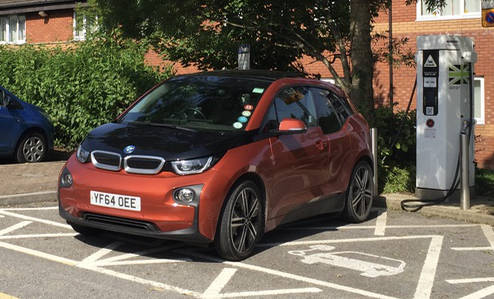
And this came back to me, a quarter of a century later, when I got my first electric car: a BMW i3, which had large and very narrow tyres -- almost like motorbike wheels -- to improve the airflow..

Some of my friends and neighbours said they'd prefer bigger, fatter tyres so there would be more rubber in contact with the road.

But I pointed out that, to a first approximation, this shape didn't make any difference. And here's my reasoning:

The thing keeping your car off the ground is the air pressure in the tyres pressing on the patch of tyre that's in contact with the road. That downward force must equal the pressure in the tyre times the area of contact. Or, to put it another way, if your tyres are at 40psi and your car weighs 2000 lbs, then you must have roughly 50 sq. ins. in contact with the road - 12.5 sq ins per tyre - whatever your shape of tyre.

So, for the same pressure and weight of vehicle, if your tyres are wide, you'll get a wide, short patch touching the ground. If they're narrow, you'll get a longer, thinner patch, but they should be about the same size in either case. Double the pressure, and you'll halve the area in contact with the ground. Halve it, and you'll double the area. But buying wider tyres will only make you look more macho.

Now, this is an approximation, partly because tyres aren't perfect spherical balloons and the area doesn't change smoothly with the pressure, partly because the forces go towards stretching the rubber as well as supporting the car, and partly because the pressure is providing rigidity to the structure of the tyre, so you get some support from the vertical bits of rubber as well, but the basic principle holds: it's primarily the pressure, not the shape of the tyre, that's important in determining how large an area touches the road.

Now, in practice, I came to rather like the long, thin tyres of the i3: they cut through water and slush very well, and were less likely to aquaplane when you encountered a puddle. (A counter-argument, I guess, would be that if there's a rut on the road, you're likely to have a higher proportion of your tyre on it for longer if your contact area is long and thin.)

So, yes, the best way to get a better grip is generally to lower the pressure, if you can face the resulting fuel costs. However, even this isn't as simple as it may seem, because you may remember from your school physics lessons that it's the perpendicular force times the coefficient of friction that counts; Guillaume Amontons showed in the 17th century that if you're sliding two surfaces over each other, the area of contact isn't important - it's the force with which they're being pressed together.

If we had perfectly flat roads, increasing the area in contact with the ground would make little difference. But sadly, the roads are getting ever less flat around here, so dropping the pressure a bit will not only get you a better grip as winter approaches... it'll make the potholes more comfortable too.

It's not too late to avoid paying for AI...

Back in January I wrote about how Microsoft had increased their Office subscription prices by a third, but you could still get it for the old price by saying that you wanted to cancel, and then selecting the 'Microsoft 365 Family Classic', which comes without all of the AI features that lead to the extra cost.

Well, our subscription just came up for renewal... and I found that they've now removed that option from the website. In fact, there's nothing on the website to suggest that writing a letter without the aid of AI is something you might want to do... or appreciating that you might not want to pay for it.

Undeterred, though, I used the online chat system. It was AI, of course, but, to be fair, I was able to get through to a human pretty quickly. She had some standard auto-generated responses about all the wonderful things AI could do for me, and a set of questions she needed to ask me about why I didn't want AI to improve my productivity in my Office suite. I said, roughly:

  • (a) It costs money.
  • (b) I'm concerned about the environmental impact.
  • (c) Im concerned about the privacy implications.
  • (d) I've used the the tools, and know that the supposed productivity improvements are mostly a myth unless you're writing stuff that nobody would want to read... in which case, why bother?
  • (e) We went to school, so we already know how to write.

I could have added that:

  • (f) I almost never use Microsoft Office, so wouldn't look there for any of this stuff anyway, and
  • (g) Modern Microsoft apps are quite bloated enough without wanting to add anything more, and
  • (h) The only things I might want to use AI for I can get for free from chat.bing.com or chatgpt.com or aistudio.google.com or claude.ai, so I'd rather spend my 25 quid on fish and chips and beer at a nice waterside pub, thank you very much.

But even without those additions, in the end she admitted that she could actually renew my Microsoft 365 Family Classic subscription for the old price.

So it's still possible, if you can manage to talk to a human. But I wonder for how much longer...

Reversing the trend...

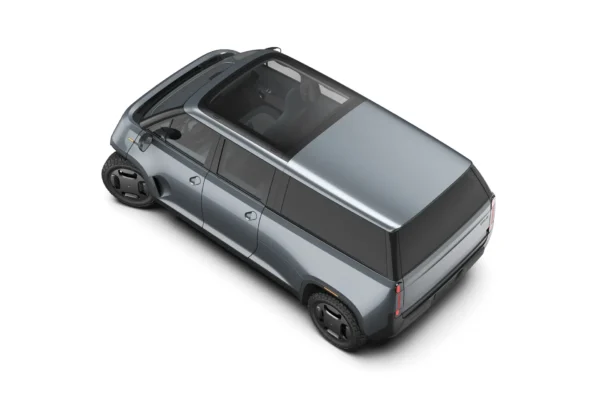
The Telo Truck

I've never really had the urge to buy an American pickup truck. And I can't remember a time when I've seen a small electric car and wished it would be exported from the U.S. to Europe (rather than the other way around)!

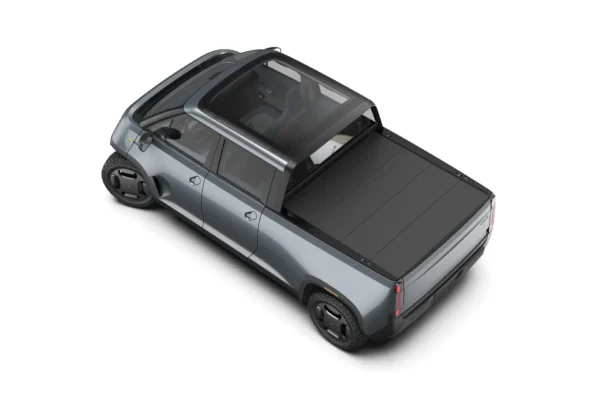
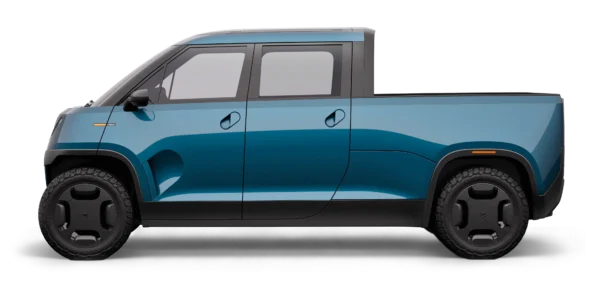
So, for me, the Telo electric truck is a first on two counts. It's not in production yet, but they have pre-release demo models and production is expected to start before the end of the year.

It can look like this:

Or like this:

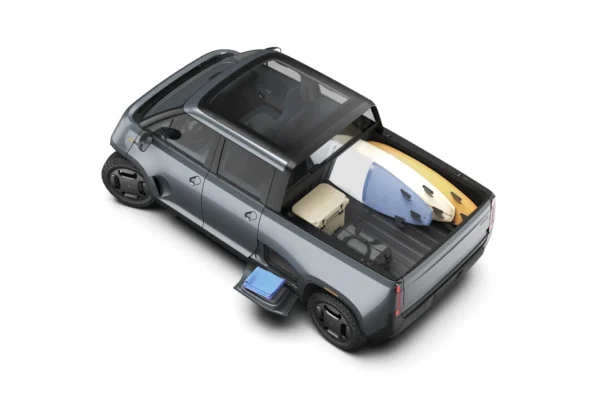
Or you can open up the back of the cab and carry this:

You can carry an 8ft x 4ft sheet of plywood in the back without having to get the hardware store to cut it up for you.

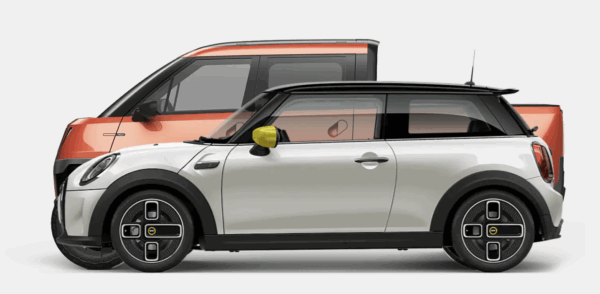
All of which is very neat, and looks like just what we want for our boating trips. But the real genius is the fact that, because EVs give you such freedom to rethink the shape and layout of your vehicles, they're able to make it this size:

I hope they do well. And make a right-hand-drive version.

One man in his time plays many parts...

I did like this article: 27 Notes on Growing Old(er), by the author Ian Leslie.

Excerpt:

Wisdom is meant to be the great compensation for growing older. Though your your knees sound like they're unlocking a safe when you bend down, and you can't straighten up without an ""oof"", you can at least revel in the depth of your insights into the human condition. Well, yes and no...

Do read the rest.

Thanks to John Naughton for the link.

When Ideology Meets Reality

I've avoided talking about the whole 'gender identity' debate here because, frankly, only fools rush in...! And where there is rational discussion on this topic, it often isn't happening online.

But Richard Dawkins is braver than me, and seldom shies away from pointing out actual facts, even when it makes some people uncomfortable!

So I found his interview with Helen Joyce, formerly an editor at the Economist, fascinating. It's long, and I know many of my readers will have very different views about it, but if you do have any interest in the topic, it's well worth watching. And it should be required viewing for anyone involved in education, I think, because they talk a lot about children.

As somebody says in the comments, "Listening makes me feel like grown-ups have entered the room."

The AI Heat Pump

Current AI systems excel at generating large amounts of text. You can give ChatGPT a few bullet points, and it will turn them into a paragraph, an email, an essay. So we're all going to get a lot more text in the future.

AIs will soon force us to confront the fact that we live in a society where, for many situations, large amounts of text are required, expected, or interpreted in some way as being preferable to brevity. (On that subject, one of the nicest phrases I've heard in AI-related discussions recently is, "Why would I want to read something that somebody couldn't be bothered to write?" )

Anyway, you generate this text from your bullet points, and then you send it to a colleague. But they're swamped with the number of other people who are doing the same. So they use an AI to summarize your email back down to bullet points. This process of expanding and then contracting made me think of a heat pump, or a refrigerator. Except that in this case, the expansion phase produces a lot of hot air.

This also means there are two very fallible intermediaries inserted into your communication channel. The process reminded me of two stories from my childhood.

The first was in the late 70s, when I first saw (and loved) Star Wars. I always wondered, though, why C3PO always spoke to R2D2 in English, and R2D2 always responded in beeps, clicks and whistles. It was clear that he could understand English, and I realised even then that this was a much harder problem than generating it. Why, amidst all that technology, had nobody thought of fitting him with a small loudspeaker and a speech-synthesis chip? On the other hand, perhaps R2 was the smart one: was the English language really the best way for two machine intelligences to communicate?

The second story was a (possibly aprocryphal) one about an early computer-based system that could do English-Russian language translation; a very challenging task at the time. They gave it the phrase "Out of sight, out of mind" and asked it to turn it into Russian. They then took the output and told it to translate back into English. The result? "Invisible Idiot".

Wouldn't it be better if you just sent your bullet points to your colleague directly?