Category: Gadgets & Toys

For whom the bell tolls

Today I spoke to a friend in Seattle who, I discover, has an iPhone. I heard it ringing in the background. That's about as close as we get to the action from here.

The somewhat embarrassingly geeky bit of this story is that I was able to recognise it as an iPhone ringtone even though I've never even actually seen one...

Phone records

It's now estimated that the iPhone sold more than 700,000 units in its first weekend. A few people are having trouble getting their account activated with AT&T, which is perhaps not too surprising... AT&T have never had any device sell that many units in its first month before.

iChat and USB cameras

Apple's iChat AV allows you to make video calls. I often have problems because I'm usually behind firewalls but when it works, it's very good. And most Apple machines have built-in cameras which make it a low-hassle process.

For those who have Macs without a camera, however, there's more of a problem, because Apple's (excellent if pricey) Firewire iSight camera was discontinued a little while ago, and iChat didn't support anything other than Firewire inputs. So what do you do if you have a Mac Mini? Or an older Mac without a camera? It's hard to find Firewire cameras these days, and using a camcorder is a bit messy.

Well, the good news is that, as of the 10.4.9 Mac OS X update, USB cameras are supported, at least if they're recent ones and conform to the standard USB 2.0 video protocols. The Xbox Live Vision Camera is confirmed to work, and I've just ordered a used one from eBay to try out.

(Other USB cams have been and are supported if you install third-party drivers, but drivers are not normally something that Mac users have to bother with, so we get out of the habit and view them with slight suspicion...)

Phone home

On Friday afternoon in the US, the iPhone will be launched, and one thing I've been wondering is how they're going to handle the paperwork for the thousands of people who will be queueing up for a new AT&T contract - the first obligatory accessory to the device.

Well, of course, it turns out that Apple won't require anything so last-decade as a signature on a piece of paper. From Steven Levy's review:

Instead of going through the usual complicated contract signing and credit-vetting ceremony with a fast-talking and slow-processing salesperson, Apple has come up with a startling idea: you simply buy the thing and go home. Then you open up the snugly fit black box - the design blitz at Apple begins with the packaging - and take out the handset. ... Setup is a snap. As with the iPod, the device is a satellite of Apple's free iTunes software. Plug the iPhone into a computer with your iTunes library (Mac or Windows) and the automatic sync function not only carries over your songs, videos and movies on iTunes library, but also photos, your contacts and calendar items. It also copies your e-mail address book and information onto your phone. This is one of the few phones that easily imports your information from your PC; because this is usually such a painful process, the vast majority of people with mobile phones never get around to moving over all their contact and calendar items. Signing up for phone service is easily handled in a straightforward process through the iTunes store.
The features of the iPhone have been discussed elsewhere in a phenomenal number of column inches and podcast minutes. As Leo Laporte says, this is perhaps, with the possible exception of the PS3, the most eagerly-anticipated consumer electronics device ever launched. But Levy points out that it may also have a huge impact even for those who don't splash out on this Mercedes of mobile devices:
In a sense, the iPhone has already made its mark. Even those who never buy one will benefit from its advances, as competitors have already taken Apple's achievements as a wake-up call to improve their own products.
And about time too.

Flying Saucers

At a recent business meeting, an acquaintance referred to "The Flying Saucer Company of Peterborough". I assumed that this hypothetical company was one he had plucked out of the air and given an amusing name for the purposes of illustrating his point.

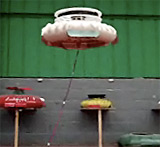
Flying saucerBut no, there really is a company making flying saucers in Peterborough. Small ones, at present, and battery powered, but the little video clip on their front page gives the impression that they've managed to make them work pretty well. Stability has been one of the problems to plague similar projects in the past.

Their site says:

The craft will be most useful in urban environments, where its ability to hover and fly close to and within buildings will enable close quarter surveillance and intelligence gathering. Having no exposed rotating parts, brushes with walls etc., do not compromise the craft's flight.
There was an article a couple of months ago in the Daily Mail which includes some more information and links to a video clip giving a better idea of how it works. Of course, being the Mail, they focus on the fact that the US military is interested, and how the inventor "set about turning his workshops into his own mini-Area 51s"! Good God. I can't believe I actually referred readers to the Daily Mail. Standards are slipping. I apologise. Will attempt to rectify.

Gadget limbo

About a month ago, I lost my Nokia E61 on the far side of the world. This wasn't as distressing as it might have been, because I knew I had my trusty old Blackberry 7100t waiting for me when I got home.
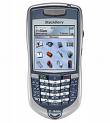
BlackberryThe 7100t is the best phone I've owned, in terms of reliability, quality of manufacture, and design of software. I've been thinking it would tide me over until an iPhone came along. But, in Europe, that's likely to mean waiting until at least the New Year, and 6 months is a long time in gadgetland.

The Blackberry is just as good as I remembered, but I've been spoiled now by some of the E61's features... Spoiled by having the TomTom software in my pocket. Spoiled by being able to use my phone as a 3G modem on T-Mobile's very reasonable data rates. Spoiled by the wifi connection and the quality of the loudspeaker which meant it was a great way to listen to podcasts. Some of these were a real pain to set up, but once working, they were really quite useful. It's not clear that even the iPhone will offer any of these. And now Nokia have their Media Transfer suite, which looks like good news for Mac owners with N-series phones. I could be tempted...

On the other hand, I'm not sure that I want to forsake Blackberry software for the rather buggy and disjointed interface that Symbian has, sadly, become. Come on, RIM - give us a 3G modem, at least!
Foleo

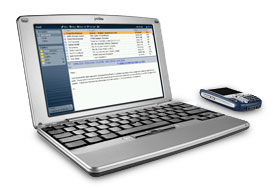
Palm foleoAh - now, this is really quite interesting. I've been watching and playing with a variety of smartphones and similar devices recently. They're starting to get large amounts of storage, quite reasonable email apps and web browsers, and, with the advent of reasonably widespread 3G and Wifi, decent connectivity. In short, they have most of what I need, most of the time - especially while travelling. The one thing they lack is a decent-sized screen and keyboard, and for some time I've been thinking that something like an Ndiyo terminal, driven by a smartphone, might be the architecture of the future.
Palm have been thinking the same way, and this summer they'll be launching the Foleo.

This may look like a laptop, but actually it's a 'mobile companion', designed to accompany your smartphone on those occasions when you need to type more than a few words or browse the web on something more than a tiny screen. It's not clear yet how the processing tasks are split between the two, but it's an appealing idea.

I think they could be onto a winner here.

Open Source in action

I had a great time last night visiting Catalyst, who provide software and services to some pretty high-profile NZ projects, but also seem to have a lot of fun. I liked them immensely, and it's always encouraging to see successful businesses built around Open Source.

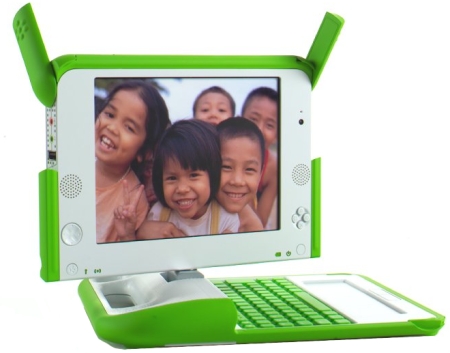
Some of them are helping with OLPC on the side, and I was able to play with one of the laptops for the first time. I was quite impressed.

olpc-gw.jpg

One ring to find them?

I think I've lost my UK mobile. It may be in the back of a cab somewhere, or under a plane seat, or lying in a Wellington gutter. Anyway, I can't find it. (So friends and family should note that it is not a good way to contact me at present!)

Normally, you have a good chance of finding mobiles simply by calling them. But this one is switched off, or the battery is dead; I just go straight through to my voicemail.

I want a way to switch it on remotely. Perhaps a phone could wake up every half hour, check for any messages, and if you had sent it a special text it would respond in some way - emailing you what it could deduce about its position, for example, and staying on for a while so you could call it.

The frustrating thing is not knowing whether it's here in my hotel room somewhere, or hundreds of miles away in Auckland airport, or lurking under some Wellington restaurant table... I may never know.

The paperclip-less office

I've just realised why the concept of 'the paperless office' is fundamentally flawed. Inherently self-contradictory. Can't possibly work.

If our ever-more sophisticated electronic gadgetry finally produces a really attractive reading and writing medium, we may live in a world without paper. Without staplers and punches. Without paperclips. It will seem wonderful for a while.

And then what will we use to press the little recessed reset buttons on those gadgets when they go wrong?