The Emperor's New Phone
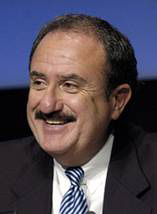 Sol Trujillo, the CEO of Telstra, gave the opening talk at FiRe tonight. He made several interesting points, including a complaint about his newly-installed HDTV system and the 50-button remote that came with it, which he found completely bewildering. Somebody had installed it for him, and he knew that he had HDTV service, but when he arrived home, he couldn't work out how to get to it. Why are so many consumer devices so hard to use? And that's when you're only using one of them at once. Just wait until you get your HDTV hooked up to your DVD and your Tivo and your XBox and your PC and....
My most poignant experience of this recently is the Motorola RAZR, perhaps the most beautiful cellphone hardware ever created, combined with the worst ever software user interface.
 Whenever I talk about this in public, people who know Motorola phones laugh in agreement. Now, I can't believe that everyone at Motorola is an idiot - far from it - so they must know that they've created a monstrosity - beauty on the outside, beast on the inside. I can therefore only deduce that they don't care. Why not, and how can we, the users, make manufacturers care, so that they fix it?
The problem, I think, is the disconnect between the buying process and the using process. Motorola knows that when you're in the shop, you must make your purchasing decision based on external appearances and feature checklists. If you do get the chance to try the product out you're only going to be able to give it a few minutes' testing and you're unlikely to discover, for example, that using the contacts list is like wading through molasses as soon as you load it up with a few hundred numbers. So they make it look nice on the outside and hope that you get it out of the store before you find out the limitations.
In the software world, especially on the Mac, we're moving towards 'try before you buy' downloadable demos, which give you a chance to discover the strengths and weaknesses of a product before you splash out serious amounts of money on it. And as we move further towards software in the form of web-based services, we have a greater opportunity to abandon it when it stops meeting our needs or we find something better. This, I'm sure, will lead to better products.
But what can we do about hardware?
- It would be great if stores offered some way to try the product for a longer period, beyond the typical 'returns within 14 days' arrangement. I'd happily pay 10% extra on the purchase price for the right to return a device for any reason within 6 months, for example. I suspect this model wouldn't appeal to the stores, though.
- If I had access, while in the store, to trustworthy consumer reviews and reports about the four phone models I was considering, I could make a much more informed decision based on the longer-term experiences of those who had gone before. I guess I could try this using the browser on my phone at present if it weren't so hard to use...
- If more hardware devices had an open, or at least customisable, software platform, then many user interface issues could be solved after purchase. I could download an improved operating system for my RAZR from some third party, for example. If I knew that were possible, I might even consider buying a Motorola phone in future.
Comments